


History of Wine
- engelheimvitv
- Jul 18, 2023
- 2 min read

History of Wine
The Vines
The Vitus vinfera grapevine that is commonly used in vineyards today was originally native to the Mediterranean region. Before domestication, the vines were dioecious, meaning there were separate male and female plants. This feature required cross-pollination to occur for fertilization to take place. As domestication occurred, plants became self-fertile which was beneficial for production in regions that had few pollinators.
The vines themselves are very hardy in multiple facets. They can grow in cold and hot climates; this became an important feature which allowed for the spread of the vine. Another feature that influenced the spread was the low water and mineral requirements. Growers want the vines to dig their roots deep in search of water. This is one of the cases where a little bit of stress is good. In terms of maintenance, vines can handle heavy pruning; in the winter, they are cut back to the main vine called the cord-on.
Fun fact: Before the trellis system was developed, growers would use trees as a support for the vines. Trellis systems were developed in Roman times.

Wine
Wine is hypothesized to date back to the early stone age. It is believed to be very crudely made and consumed quickly as the containers were not sealed in a way to preserve the wine. The Neolithic period is when winemaking truly began as vessels have been found containing residue indicative of wine. Wine was valuable because fermentation helped preserve foods and improve the nutritional value; the antimicrobial and antioxidant properties were important too.
The process of making wine today still uses the basic processes as in the beginning; fruit being cut from the vine, extracting the juice, fermentation, and aging.
The vines moved from Egypt to Greece and Italy, where wine became a large part of the culture. The Grecian people had a whole segment of pottery designated for wine; this included both vessels to consume from and those to store. In both the Greek and Roman cultures there was a god of wine. The Romans pushed the development of wine further by improving upon the practices of their Greek counterparts. Some of the most important developments were the trellis system, improved presses, classification of grapes, value of a good seal, and finally the use of barrels and glass bottles.
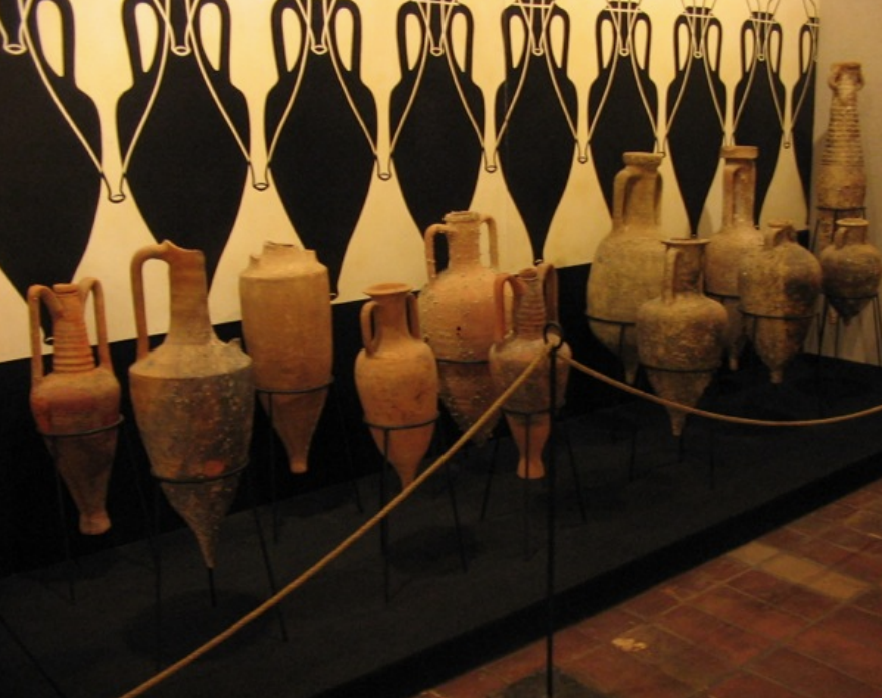
Amphoras were pottery jars used for transportation. As can be seen in the background of the picture below, the jars could be stacked together which helped stabilize them during transportation on ships.
During ancient times, fermentation was first believed to be a spontaneous event. As time went on, people learned more about the process and how to utilize it. Thanks to Louis Pasteur, we now know that yeast is what changes sugar into alcohol. This began the more modern winemaking practices we follow today.


Comments